
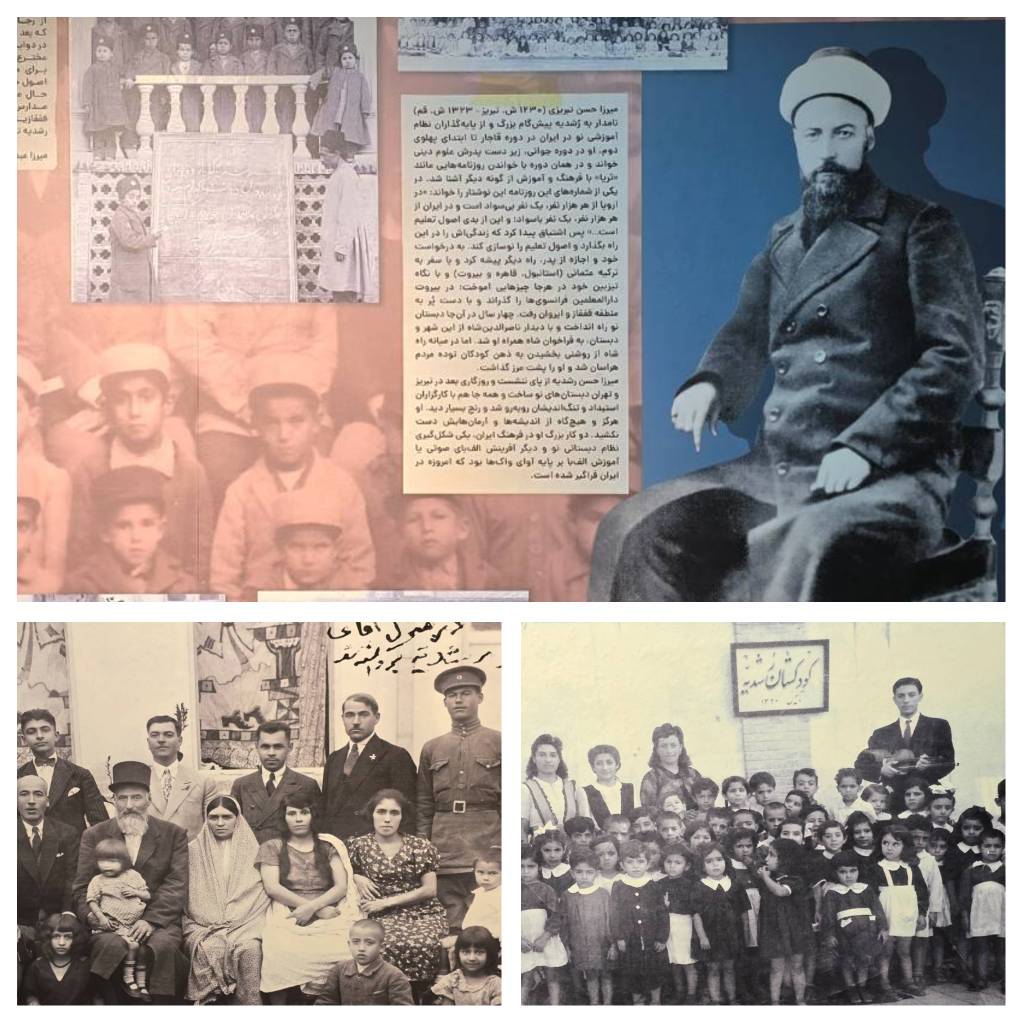
The Qajar period marks the beginning of modernization in Iran. The foundations of modern education in Iran were established during this era. Sending students abroad by Qajar rulers, on the one hand, and the establishment of Dar al-Funun along with the arrival of foreign instructors for teaching, on the other, represent key milestones in the history of modernization in Iran. Consequently, cultural exchanges with the West began during the Qajar period. Influential figures such as Mirza Hasan Roshdieh played a pivotal role in this process. The Qajar Section of Iranak Museum features a wide array of exhibits, including lithographed books, handmade dolls, childhood tools, and clothing, as well as examples of imported dolls introduced into Iran during this period.
Mirza Hasan Roshdieh
Mirza Hasan Tabrizi, the founder of modern educational systems in Iran, was born in 1230 SH (1851–1852 CE) in Tabriz. In his youth, he studied religious sciences under his father. During his early years, he became acquainted with modern culture and education through newspapers such as Soraya. By traveling to the Ottoman Empire (Istanbul, Cairo, Beirut) and studying at the Teacher Training College in France, Roshdieh gained extensive knowledge in pedagogy. Upon his return, he initially established schools in the Caucasus and Yerevan. Later, at the request of Naser al-Din Shah, he came to Tabriz and founded new schools. Despite his efforts, he faced strong opposition and many hardships. Two major contributions of Mirza Hasan Roshdieh to Iranian education were the creation of a modern school system and the invention of a phonetic alphabet or teaching literacy based on vowel sounds, which is still used in contemporary teaching methods.
Lithographed Books
These books reflect various aspects of children’s lives, play customs, family traditions, and social behaviors. Two illustrations, “Girls’ Doll-Playing Assembly on Friday” and “La‘b al-Muluk” from the book Miftah al-Molk Illustrated Alphabet, demonstrate the different upbringing practices for girls and boys during the Qajar period.
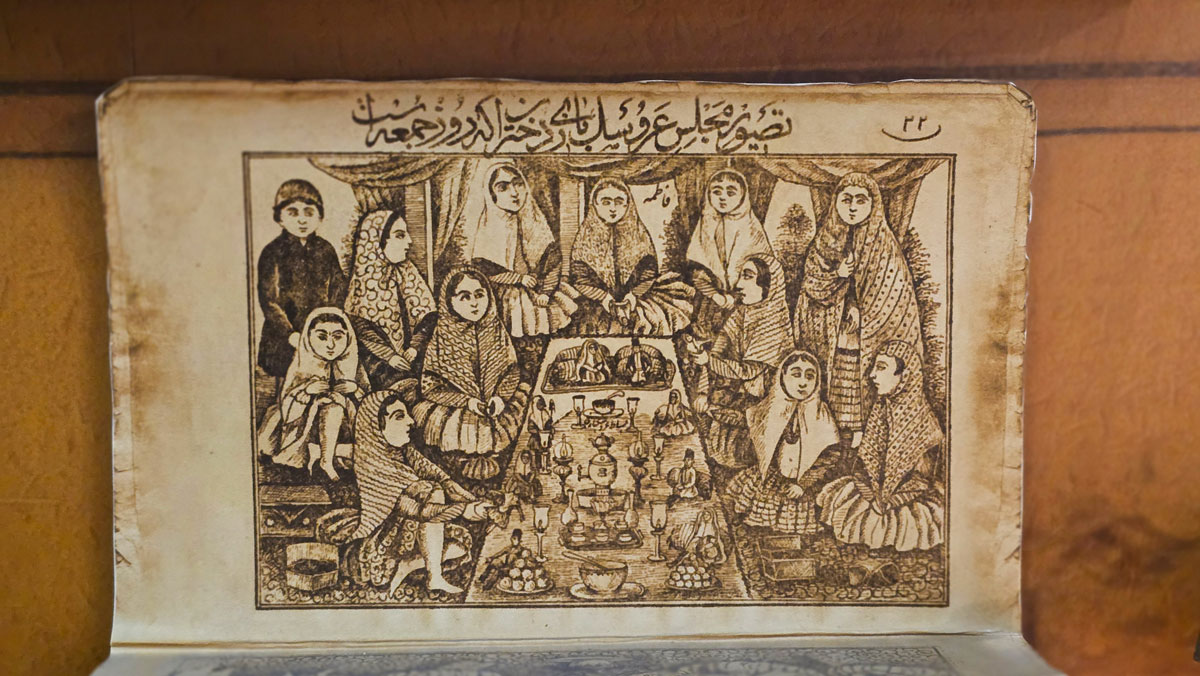
Illustration of “Girls Playing with Dolls on a Friday”
Handmade Folk Dolls
Handmade dolls, crafted from accessible materials such as fabric scraps, reeds, palm leaves, and other plant fibers, were primarily made by women and girls, although men sometimes participated. Some of these dolls originated from ancient rituals such as pre-spring ceremonies, rain-seeking rites, and healing or wish-fulfillment practices. Examples include rain dolls called Atalu Matlu, Chuli Qazak, Chamche Gelin, and Bokeh Baran. The Takam doll, specific to Azerbaijan, is associated with pre-spring rituals.
Another group of handmade dolls was used for entertainment and theatrical purposes, such as Asbak (wooden horses) or donkeys.
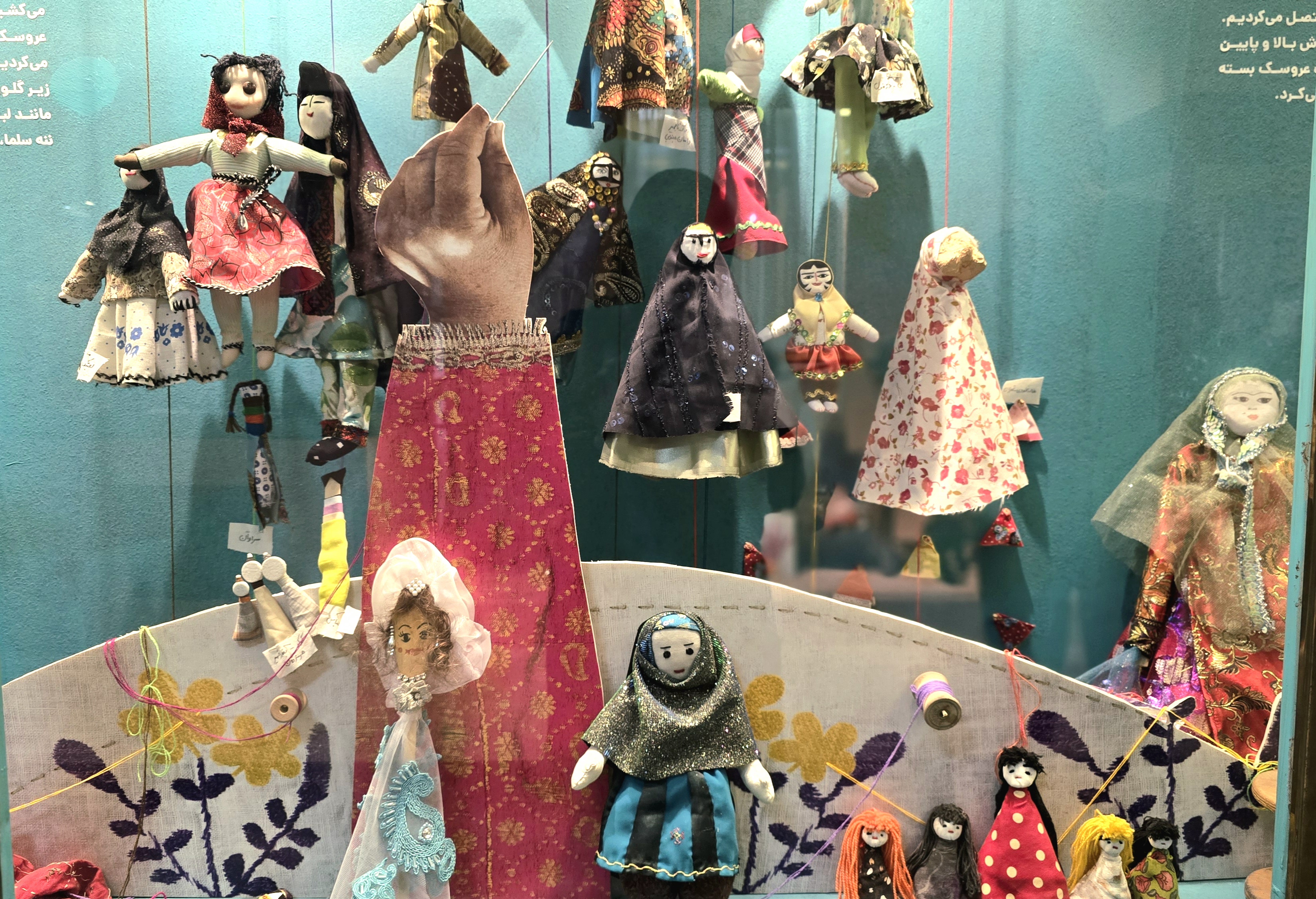
Handmade dolls
Traditional Iranian Marionettes (The soldiers)
Isfahan’s traditional Marionettes (The soldiers) belonged to Hasan Louian, known as Hasan Hoqqe-baz (magician), and are now preserved in the House Museum of Dolls and Toys in Kashan. Reconstructed versions, made by Amir Sohrabi, are displayed at Iranak childhood Museum.
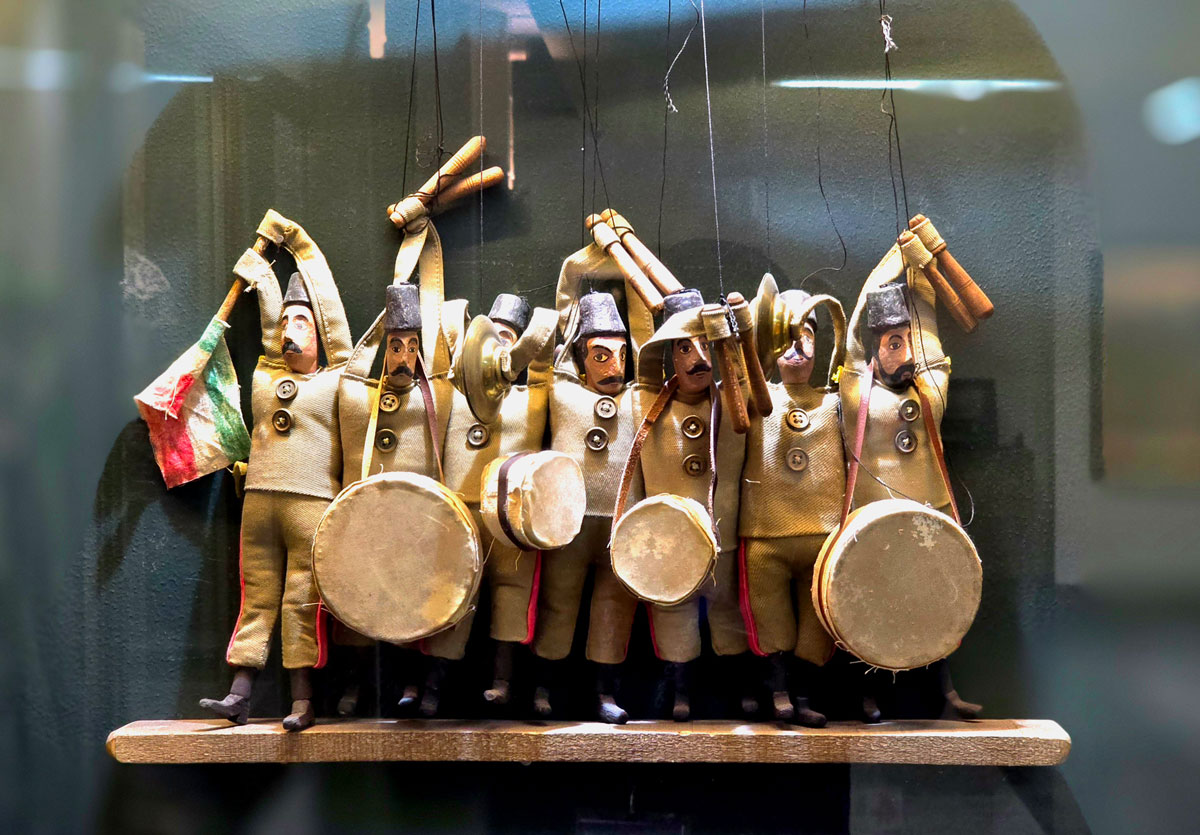
Traditional Iranian Marionettes
Childhood Tools
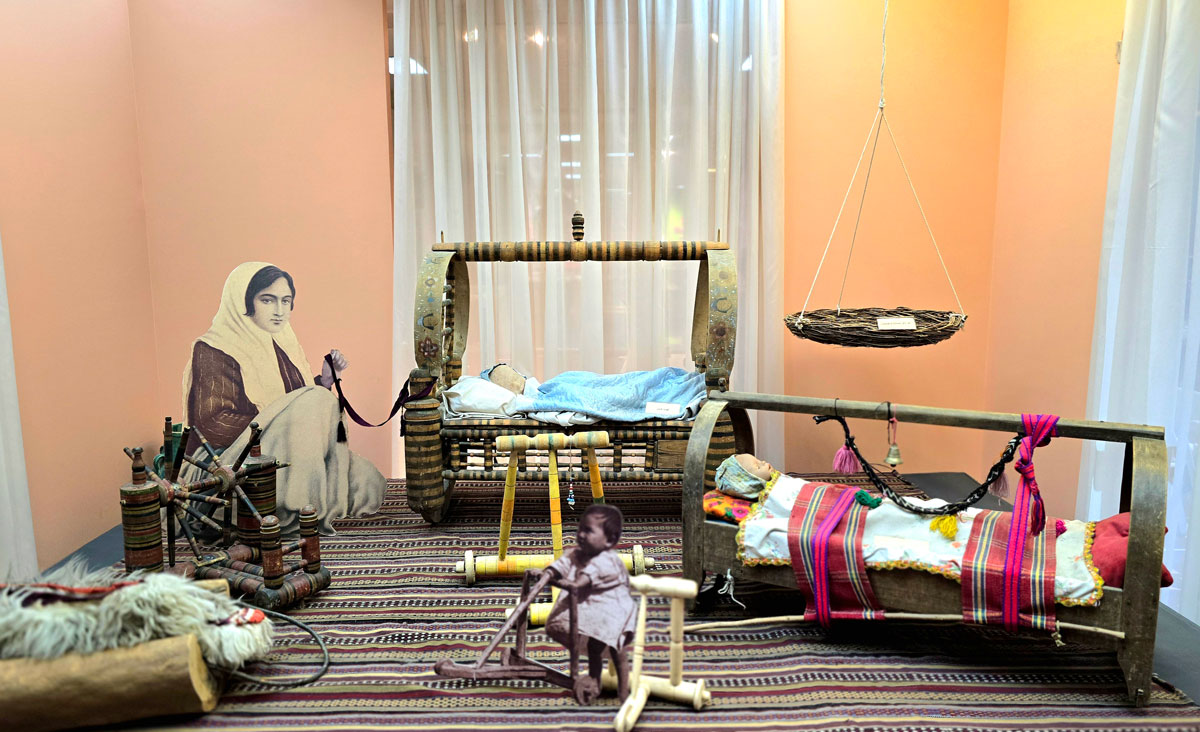
Cradles (Nenu)
The cradle or swing has been a lifelong companion for humans. It can be considered one of the earliest inventions of mothers for caring for infants and young children. The cradle functions as a mother’s embrace, protecting the child from dangers, insects, and harmful animals. In ancient times, in caves, forests, and later in huts and houses, infants were placed on suspended cradles using two ropes. Rocking the cradle provided a soothing environment for infants, often accompanied by lullabies.
Children’s Clothing in the Qajar Period
During this era, children’s clothing did not have a distinct style and generally resembled adult attire. Children from lower social classes wore tattered garments, while those from elite or royal families wore intact clothes, yet none had a specific “child” design.
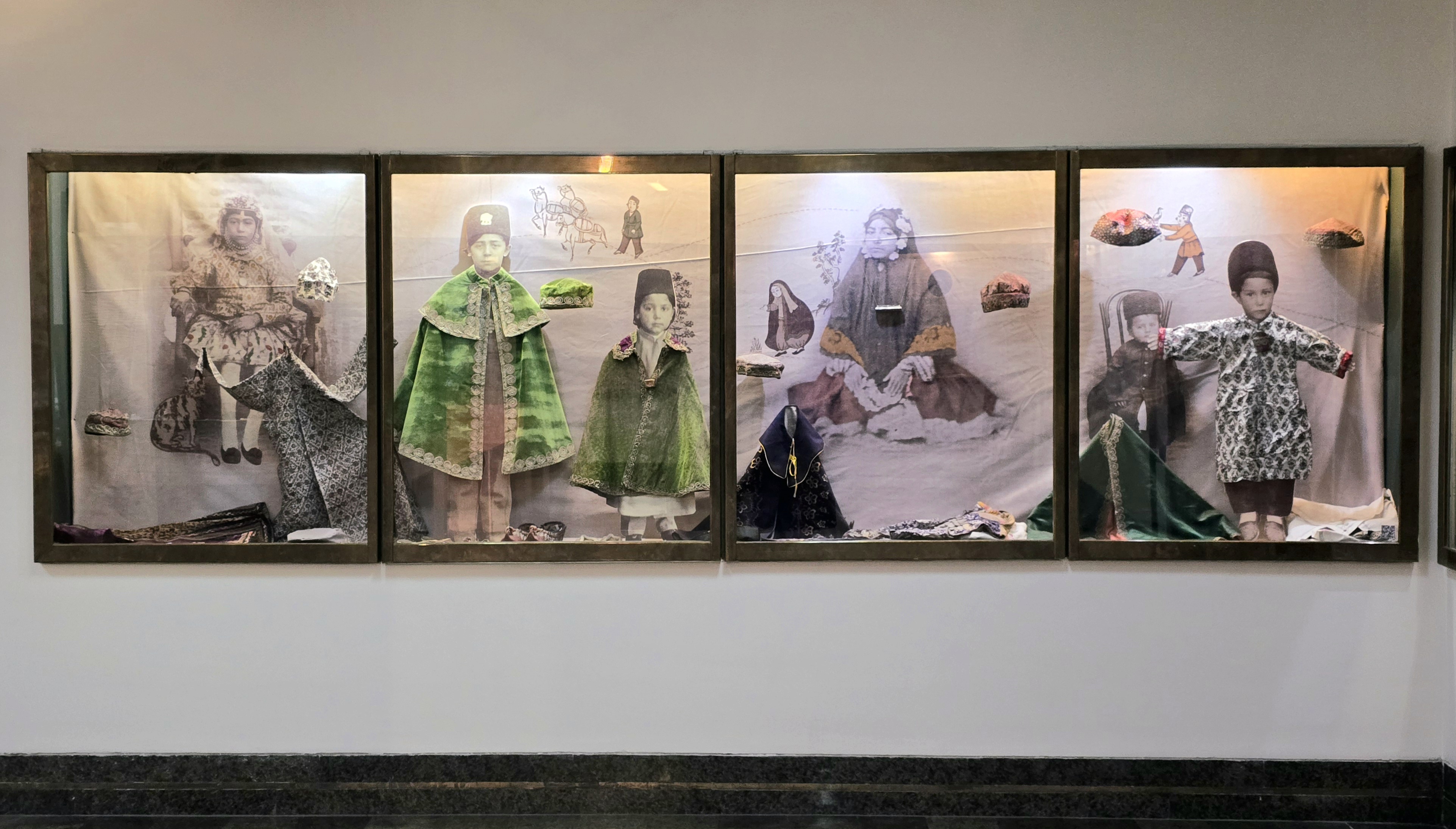
Qajar-Era Children’s Clothing
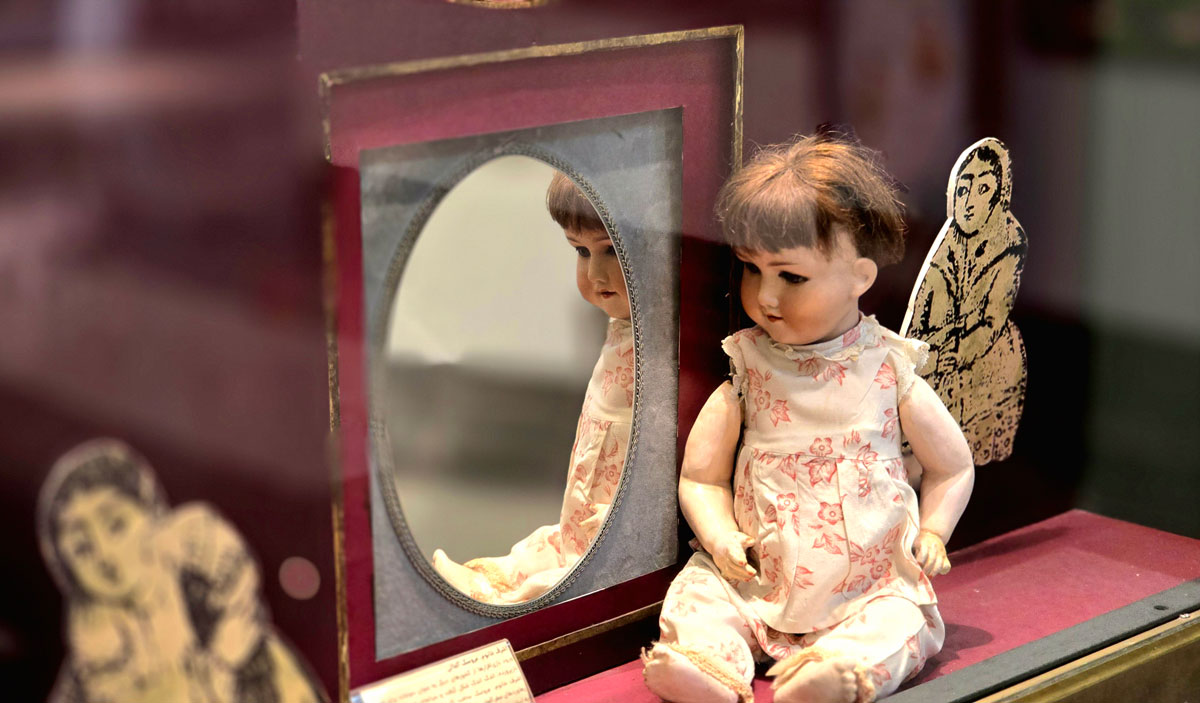
Ashraf Khanum — German Doll
The introduction of imported toys as gifts for pampered children gradually became a tradition. Ashraf Khanum, a doll manufactured by Armand Marseille in Germany, was among the gifts brought from Germany to Iranian children in the early 1920s (1300s SH). This doll was given a Persian name within Iranian families.
Toy Horse on wheels
Wheeled Toy Horse (Asbak) was a popular German toy from the 18th to the early 20th century. These wheeled horses were foreign gifts for children from wealthy families, including the royal court, aristocrats, merchants, and landowners.
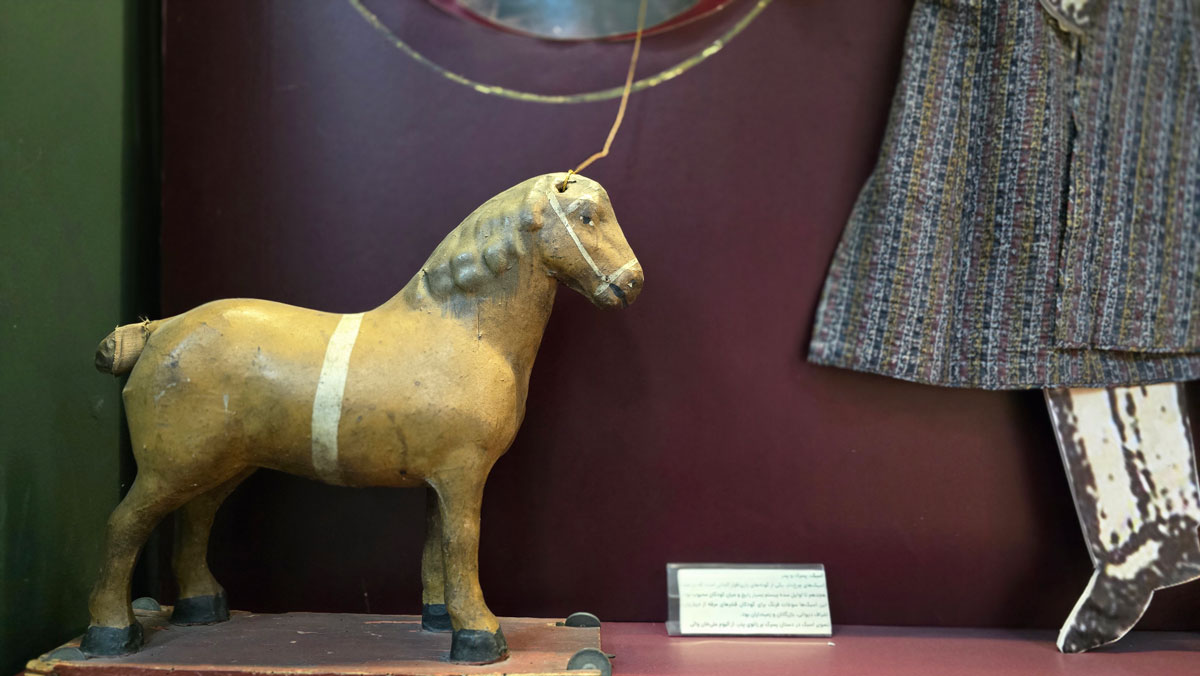
Qajar-Era Toy Horse