The Islam Section of Iranak Museum encompasses the narratives of childhood in the Shahnameh the representation of childhood in unique manuscripts, and the layout of the Maktabkhaneh, reflecting the embodiment of Islamic culture during the medieval centuries.
Childhood in the Shahnameh
Childhood holds a fundamental place in the Shahnameh; Ferdowsi regards it as the source of character, wisdom, and heroism. Many great heroes began their path to heroism during their early years under the guidance of wise mentors, with proper care and upbringing.
In honor of this ancient literary heritage and to introduce it to children and adolescents, Iranak childhood Museum has dedicated a section to the narratives of the Shahnameh. By the end of 2025 (Esfand 1404), the museum completed a three-dimensional representation of the story of Zal and the Simurgh with the help of a group of artists. This story depicts Zal’s childhood—from abandonment, upbringing by the Simurgh, to his return to Zabol and the beginning of his heroism through multiple interactive frames.
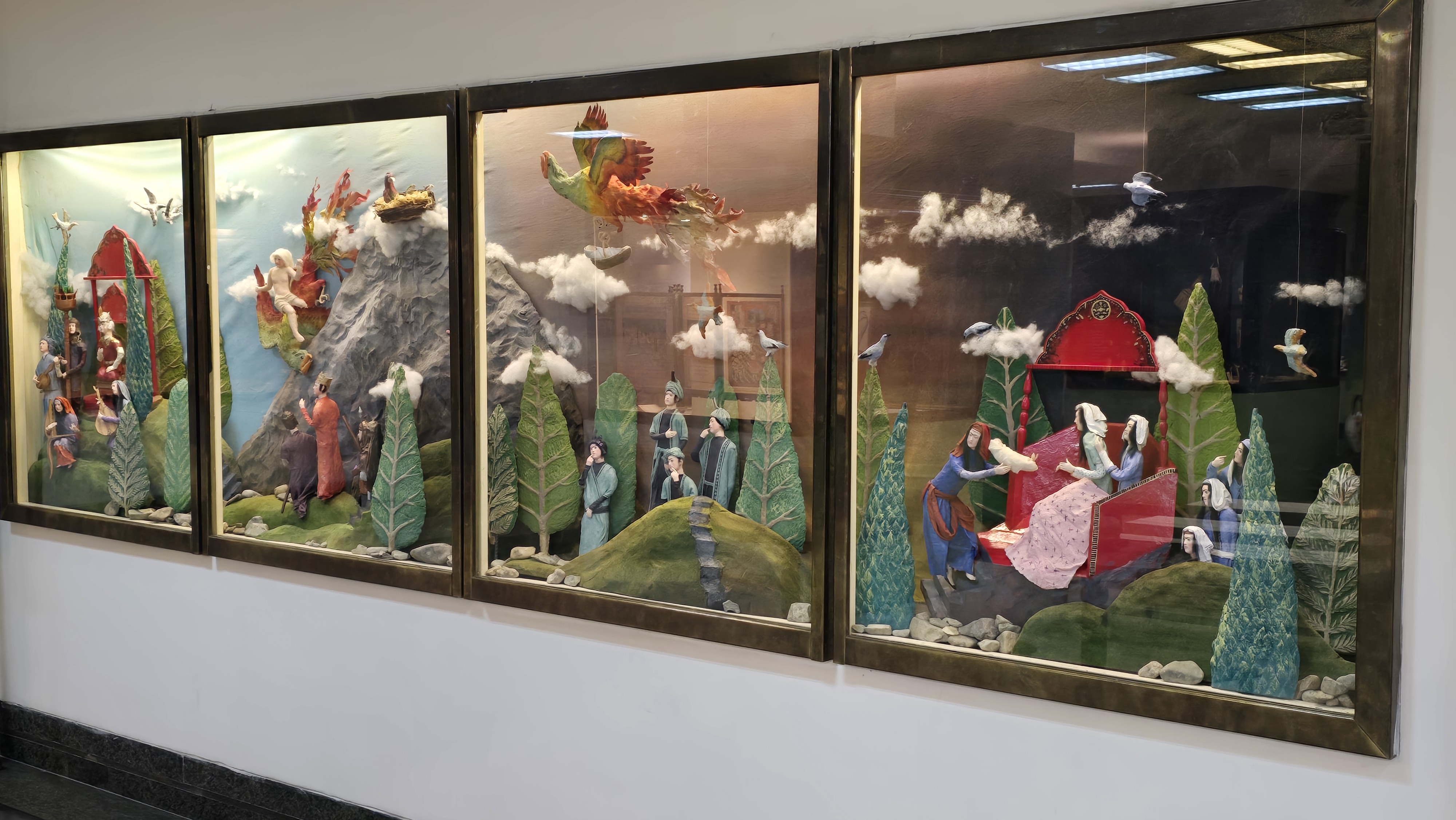
Childhood Narratives from the Shahnameh
Manuscripts
Miftah al-Fuzala
A unique illustrated Persian dictionary manuscript, written in the second half of the ninth century, is displayed in this section. The manuscript contains 22 chapters explaining the meanings of words, names, animals, plants, tools, and games. In some cases, alongside the Persian definitions, the equivalent word in Hindi is provided. Selected illustrations from this beautiful collection represent games and toys of children and adolescents from that period, originating from Iranian civilization, such as: Lahaftan (doll), Farmuk (yo-yo), Ziyad (dice game), Kuresht (wooden horse), and more.
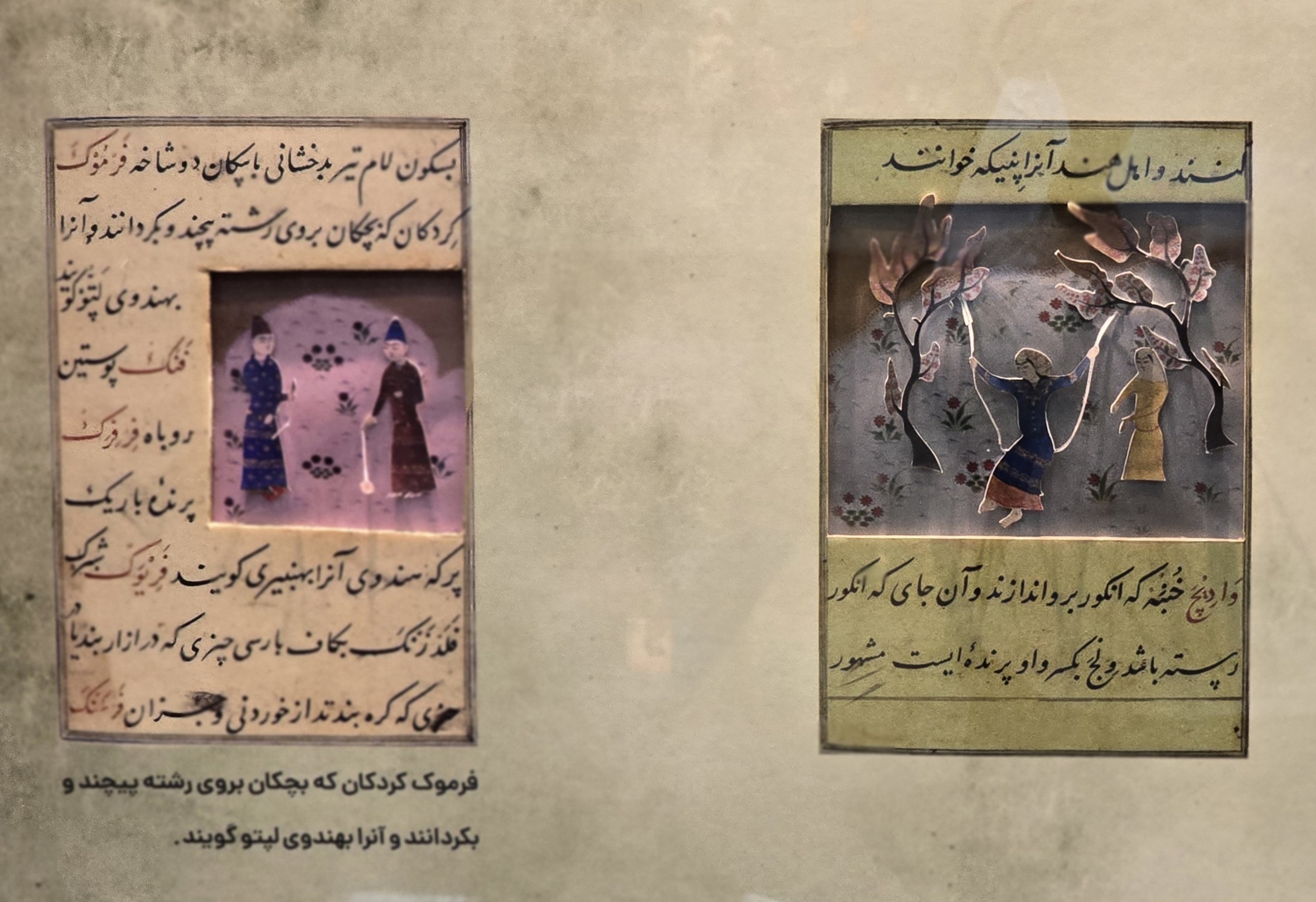
Historical Manuscripts at Iranak Museum
(Mush Va Gorbeh (The Mouse and The Cat
Nezām al-Dīn ‘Ubayd Zakānī, born in Qazvin in the 8th century after the Mongol invasions, holds a special place in Persian literature. He is best known for the tale The Mouse and The Cat. Written in a simple, child-friendly language, this long poem narrates the hypocrisy of a cat from Kerman, his ascetic transformation after years of hunting mice, the deception of the mice, the battles between mice and cats, the mice’s eventual triumph over the cats, and more. In children’s literature of the post-Islamic period, no other work reaches the significance of this narrative.
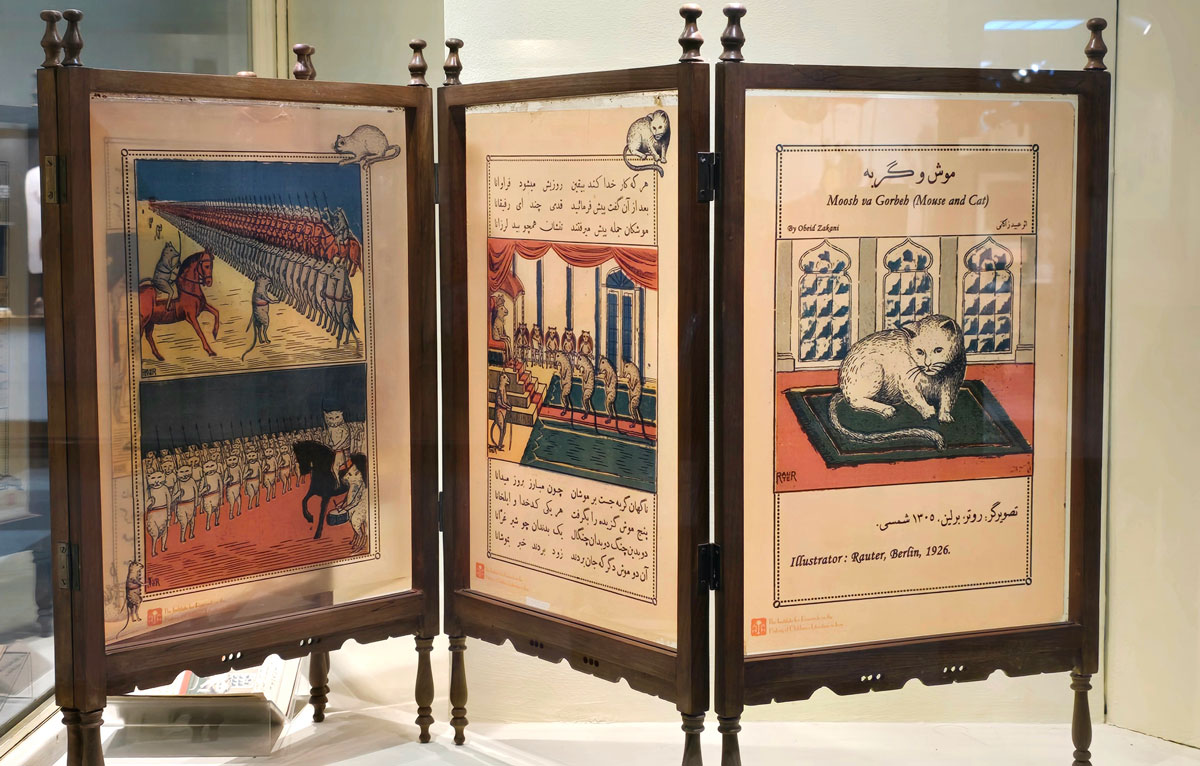
Ubayd Zakani’s Mouse and Cat
Maktabkhaneh (Traditional School)
The Maktab or Maktabkhaneh was part of the Islamic tradition of basic literacy education. Initially established inside mosques and later around them or in teachers’ homes, it aimed to teach children Quranic reading. The core of the Maktabkhaneh was religious education.
Before Islam, elementary schooling in Iran was limited to children from elite families. With the introduction of the Maktab, literacy became accessible to every child. The Maktabkhaneh had distinct educational methods: gathering students in circles, sitting face-to-face with the teacher, and the teacher’s role as Mullah (male) or Mullabaji (female), with students called Khalifa. Writing tools included tablets on which children wrote with chalk or reed pens and black ink. Calligraphy was a significant measure of literacy. Corporal punishment, such as striking the feet with a stick or the teacher using a rod on children’s fingers, was considered essential. The teaching method was rigorous, starting with the alphabet. Some teachers used verbal descriptions of letter forms.
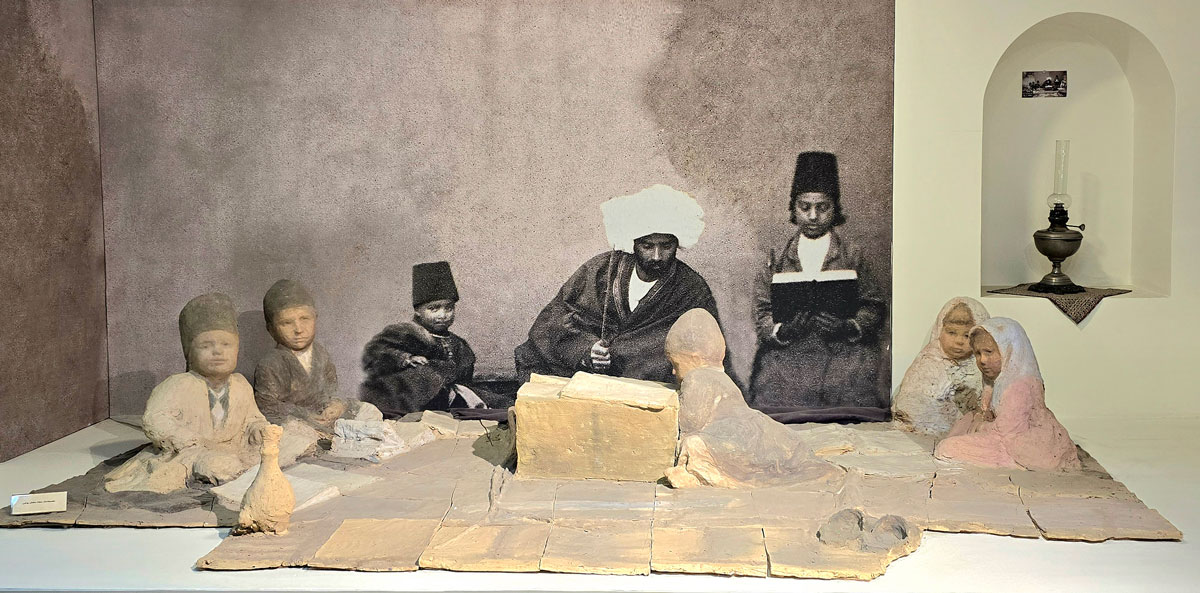
Traditional Maktabkhaneh (Traditional school) Installation at Iranak childhood Museum
Tuti Va Baqqal (The Parrot and the Grocer)
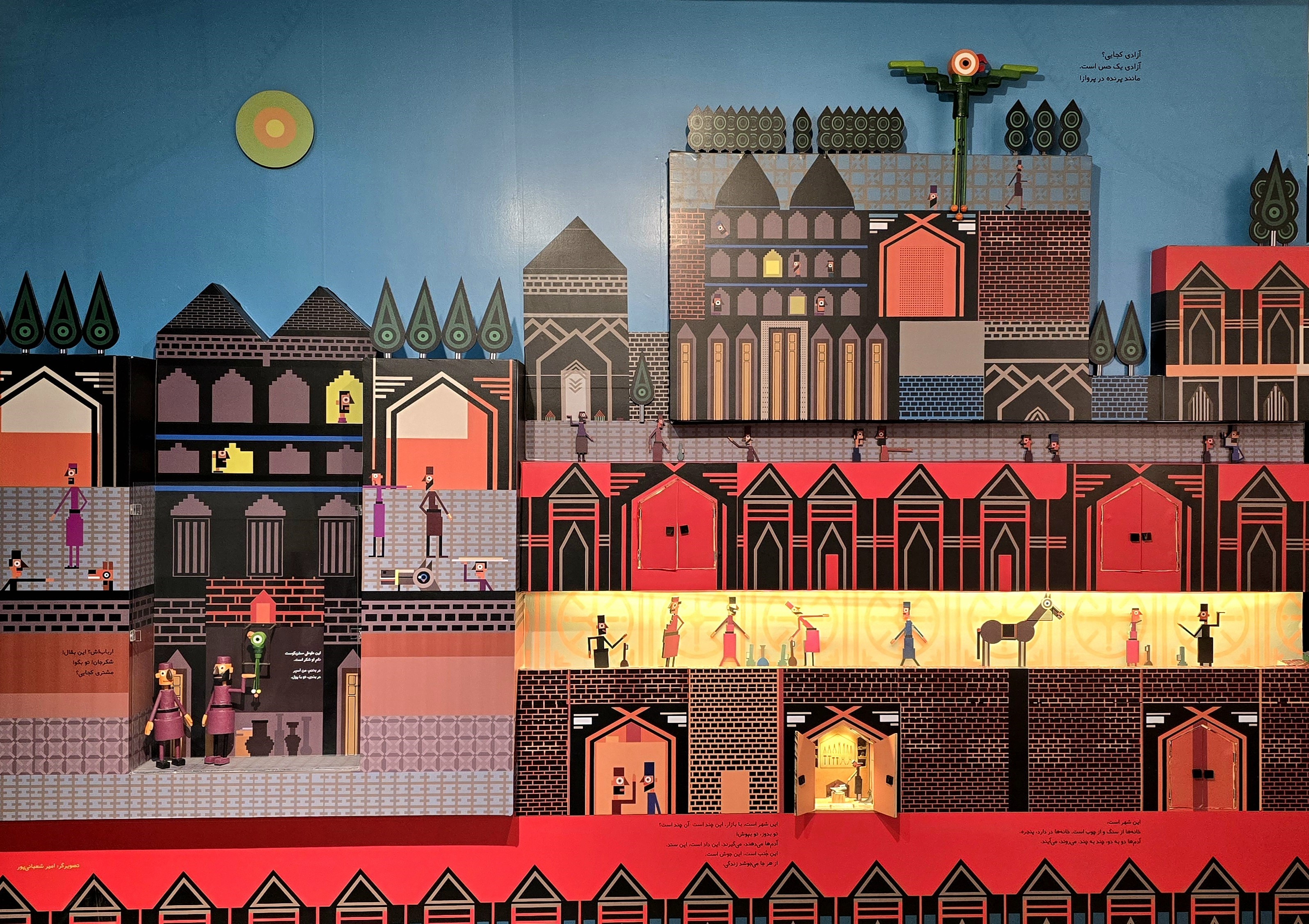
Introducing classical Iranian literature to young generations is a key mission of Iranak childhood Museum. The story Tuti Va Baqqal (The Parrot and the Grocer) from Rumi’s Masnavi is one of the most prominent narratives of classical Persian literature. In Iranak, it has been presented through a new interactive storytelling and illustration format, allowing contemporary children and adolescents to engage with this ancient literary work and gain a deeper understanding through hands-on interaction with this innovative exhibition.